

Services / Neurofeedback
Neurofeedback
Also called EEG Biofeedback, neurofeedback is a non-invasive form of brain training that uses real-time feedback from your own brain activity to help the brain practice more regulated and flexible patterns without medication.
Schedule an AppointmentAbout this service
Think of it as training and exercise for your brain: measured, painless, and without medication.
Your brain map is reviewed by a BCIA-certified clinician, who creates a training plan based on your individual brain patterns and goals.
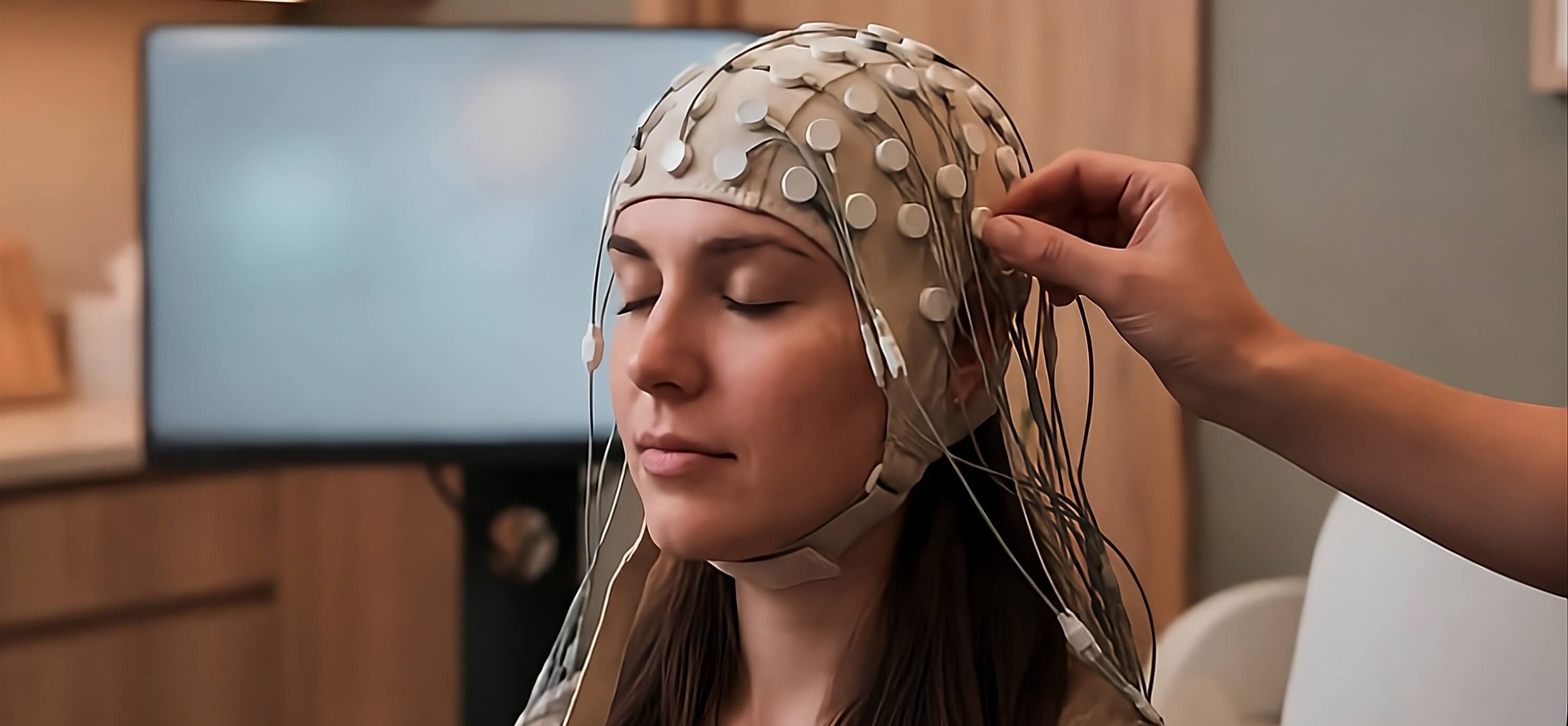
During each session, sensors are placed on your scalp and ears. The sensors only read your brain activity; nothing is sent into your brain. Your brain activity then controls a movie, game, or music, providing immediate feedback when the desired pattern occurs.
Over time, this allows the brain to practice new patterns. Progress is monitored through regular check-ins and, when appropriate, comparison with your baseline qEEG.
What it is
Equipment measures your brainwave activity while you learn to self-regulate it: no medication, nothing sent into the brain.
A film, a game or your music
Reaching the target pattern rewards the brain. Like exercise, repetition is what makes the change hold.
Guided by your brain map
The frequencies trained come from your own qEEG, so no two protocols are the same.
In-office or at home
The first clinic in Northern Colorado to offer home-based training, with coaching so it works as well as in-office.

How a visit works
Neurofeedback


Your brain map is reviewed by a BCIA-certified clinician, who creates a training plan based on your individual brain patterns and goals.
During each session, sensors are placed on your scalp and ears. The sensors only read your brain activity; nothing is sent into your brain. Your brain activity then controls a movie, game, or music, providing immediate feedback when the desired pattern occurs.
Over time, this allows the brain to practice new patterns. Progress is monitored through regular check-ins and, when appropriate, comparison with your baseline qEEG.
What We Treat With It
- Attention & focusAnxietyDepression
- OCDPTSDSleep issues
- Autism spectrumEpilepsyLearning disorders
- Traumatic brain injuryHeadachesAddictions
- Anger and behavioral challengesTourette’s syndrome
Who this may be for
- ADHD, particularly for individuals and families seeking an evidence-informed, non-medication option
- Anxiety and sleep difficulties, especially when the brain feels restless or has difficulty settling
- Depression, either as a standalone approach or as part of a broader treatment plan
- OCD and patterns of repetitive or intrusive thinking
- Attention, memory, or cognitive concerns following a concussion or traumatic brain injury
What to expect
- Neurofeedback is training, not a procedure. Changes develop gradually over repeated sessions.
- Consistency matters. Regular sessions give the brain more opportunity to practice and reinforce new patterns.
- Around session 20, we review your progress. If there is no meaningful change, we reconsider whether continuing is the right choice.
- Accelerated training options available
How it works

Step 1
Brain map
A qEEG shows which networks to train, and in which direction.

Step 2
First ten sessions
You watch or listen while the system rewards the target pattern. Nothing is sent into the brain.

Step 3
Progress review after 20
We assess your progress after 20 sessions and adjust the plan, or reconsider whether continuing is the right choice.

Step 4
Around 40 sessions
Forty sessions is typical for lasting improvement. Sessions then space out as gains hold; some patients return for short refreshers.
What it costs
What you pay depends on the plan we build with you and on your insurance coverage. Your exact fee is always confirmed before you book.
Find out more about costReach out to schedule consultation.
Often Combined With






Get Started