
Services / Brain Mapping
Brain Mapping (qEEG)
Measures how your brain is functioning in real time. Interpreted alongside your history, symptoms, strengths, and clinical assessment, it helps your care team understand patterns related to behavior and mental health and guide more individualized care
Schedule an AppointmentAbout this service
See the Full Picture
Bringing Objective Brain Data Into Mental Health Care
Mental health care has traditionally relied heavily on symptoms, history, and clinical observation. These remain essential, but qEEG adds another perspective: objective information about patterns of brain function that may help clinicians better understand what makes your symptoms and strengths unique to you.
Looking at the Brain
The brain is central to mental health, yet its function is not routinely measured as part of psychiatric care. Brain mapping gives the clinical team an additional way to explore how your brain is functioning.
One Part of the Clinical Picture
A qEEG does not stand alone or replace a clinical evaluation. Its findings are interpreted alongside your history, symptoms, strengths, lived experience, and other available information.
Before Beginning Treatment
Brain mapping can provide a useful baseline and additional insight before treatment begins, helping your clinician consider which approaches may be most appropriate to explore.
When Progress Has Stalled
If previous treatments have not brought the hoped-for results, qEEG may offer another layer of information that helps your care team reconsider the clinical picture and individualize the next steps.

How a visit works
Brain Mapping (qEEG)



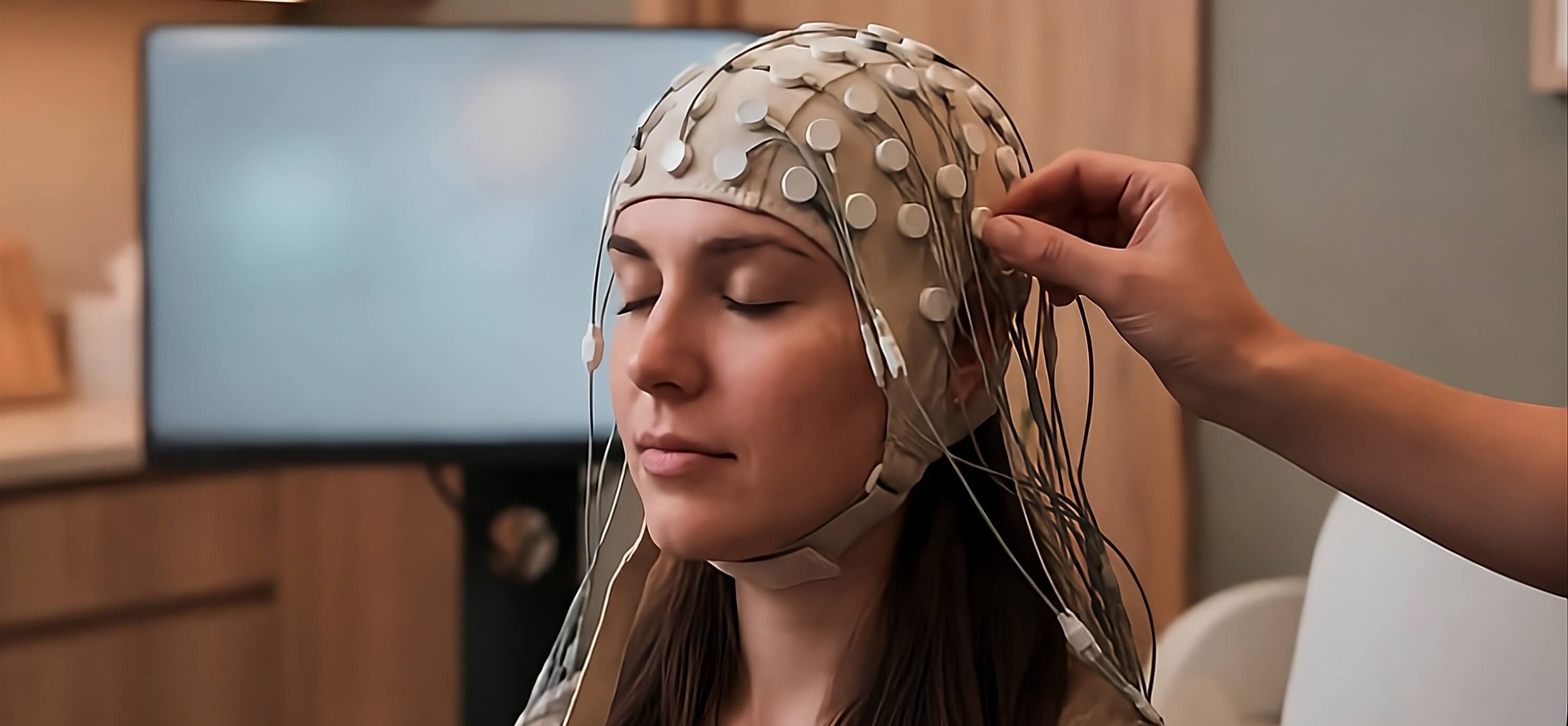
A cap of sensors is placed on your head and 15-20 minutes of brainwave activity is recorded in the office: passive, painless and with no need to shave. That short recording produces close to 300 pages of data, which is analyzed and read by a board-certified clinician. At your review appointment you receive a written report of what the map shows, how it contributes to your symptoms, and which medication, supplement and lifestyle options fit your pattern.
Your Plan May Include
- Areas of the brain with too little activity
- Areas with too much activity
- Medication classes suited to your pattern
- Supplement and lifestyle recommendations
- Personal strengths and learning style
What the Process Looks Like
A sensor cap is placed on your head to record your brain’s electrical activity. The process is noninvasive, uses no radiation, and does not require shaving or altering your hair. The recording is then processed into a detailed report and reviewed by a clinician with specialized training in qEEG interpretation.
During your review appointment, your clinician walks you through the images and findings in understandable language. Together, you explore how the patterns may relate to your symptoms, behavior, strengths, and lived experience, and how this information may contribute to a more individualized treatment plan.
A qEEG does not make a diagnosis or recommend treatment on its own. It provides another source of objective information for your clinician to consider alongside the rest of your assessment.
How to prepare
- Get a good night’s sleep beforehand
- Avoid caffeine on the day
- Clean hair, no product
- Avoid selected substances before scan
- Ask your doctor about current medications. Never stop them on your own


Who this is for
- Medication failures, or treatment resistance
- Anyone not yet in treatment who wants more information first
- Anyone considering neurofeedback or neuromodulation: the map sets the protocol
- Autism Spectrum Disorder and learning disorders
- OCD, bipolar disorder and sleep disorders
- Substance use disorders
- Parent and child or couples work, to understand the brain patterns behind behavior in a relationship
What it does not do
- It reads patterns of brain function; it does not diagnose a psychiatric or neurological condition on its own
- It does not replace a comprehensive clinical evaluation
- Results can be shifted by medication, sleep, caffeine, movement, muscle tension and recording quality
- Findings are always read alongside your symptoms, history and the rest of your clinical picture
How it works

Step 1
Recording
A soft cap of sensors records activity with eyes open, eyes closed and during a task.

Step 2
Analysis
Your data is analyzed and brain map generated by our clinicians.

Step 3
Review session
What the map shows, what to try, what to avoid, in plain language, with the report to keep.
What it costs
What you pay depends on the plan we build with you and on your insurance coverage. Your exact fee is always confirmed before you book.
Find out more about costReach out to schedule consultation.
Often Combined With







Get Started